Discover what inspectors look for during a California SB-721 balcony safety check. Learn about dry rot, water intrusion, rusted connectors, and structural decay.
Table of Contents
When code inspectors conduct a Senate Bill 721 balcony inspection, their main objective is to identify conditions that could lead to structural failure or collapse. For multi-family properties containing wood-framed balconies that sit more than six feet above the ground, this inspection is a legal mandate.
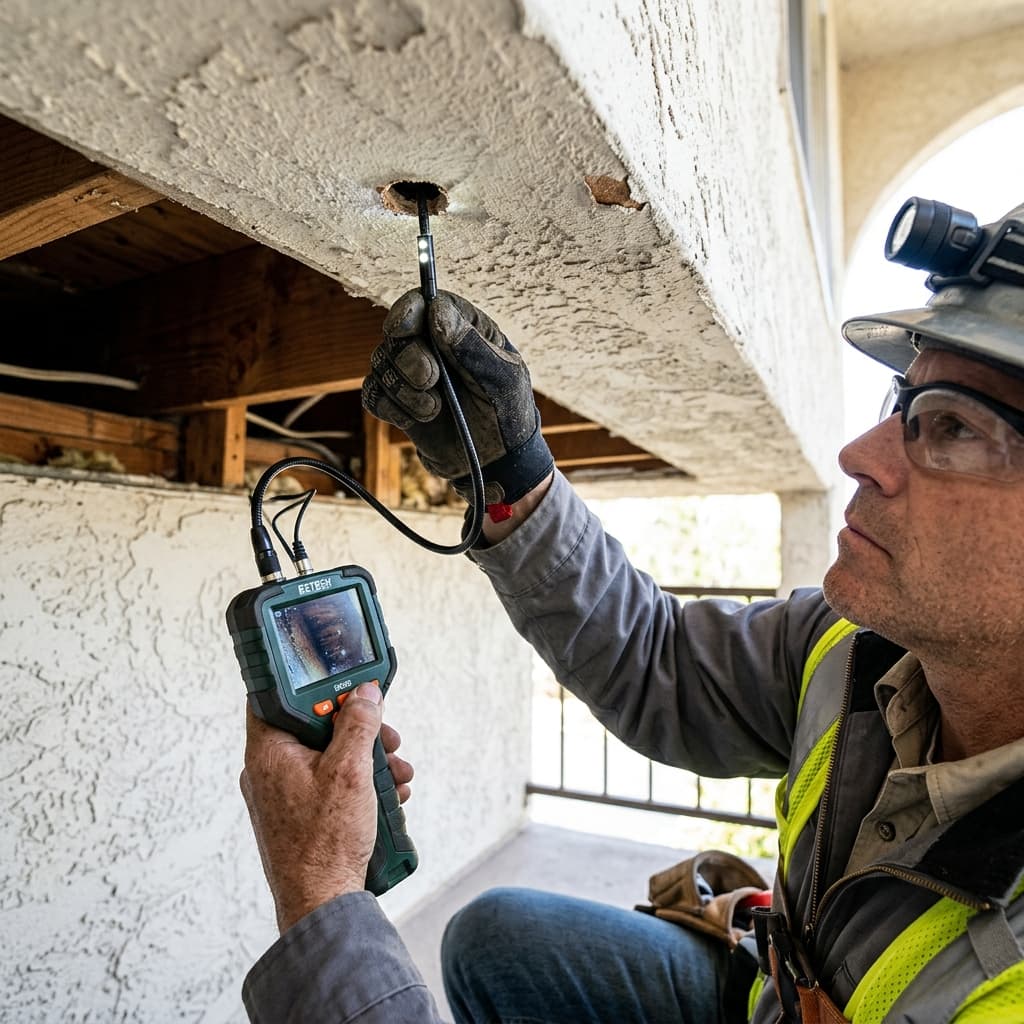
Visual inspections often scratch only the surface, which is why at PiersPro (CA GC License #1110475) we utilize borescopes and digital moisture sensors. In this guide, we detail the top 5 structural hazards found during balcony evaluations.
The Top 5 Balcony Inspection Hazards
1. Dry Rot (Fungal Decay) in Framing Joists
Dry rot occurs when moisture traps inside stucco-covered balcony soffits, allowing wood-decaying fungi to grow. The structural wood loses all structural capacity, crumbling under load.
2. Water Intrusion Along the Wall Ledger
The ledger board connects the balcony to the main building framing. If waterproofing membranes fail, water enters the wall cavity, decaying both the ledger and structural joists.
3. Rusted Steel Brackets and Joist Hangers
Metals oxidize when exposed to salt-heavy Southern California air. Corroded hangers lose their load capability, allowing beams to pull away from the framing.
4. Cracked or Blocked Soffit Vents
Stucco-covered soffits require ventilation to prevent condensation. Blocked vents trap humidity inside the balcony framing, accelerating dry rot.
5. Loose Guardrails and Railing Posts
Railing posts must withstand lateral force. Water damage at the base of the railing post decays the framing, causing the railing to become loose and hazardous.
---
Mid-Content Call to Action
Is your property compliant with California balcony safety laws?
PiersPro provides complete B2B inspections and structural repairs. We help property managers protect their residents and boards from liability.
Request an HOA Balcony Proposal or call (213) 583-6669 to speak with a specialist.
---
Technical Summary: Inspection Hazards
| Hazard | How We Diagnose | Structural Consequence |
|---|---|---|
| Joist Dry Rot | Borescope camera inspection | Hollow or soft framing joists prone to sudden collapse. |
| Ledger Leaks | Digital moisture mapping | Rotting ledger separation from main building framing. |
| Rusted Metal | Visual weld and fastener check | Fastener shearing under standard weight loads. |
| Blocked Vents | Airflow/soffit vent check | Internal moisture accumulation and fungal growth. |
| Loose Rails | Lateral pull force test | Fall hazard at balcony deck edges. |
Frequently Asked Questions (FAQ)
Q1: What is the first compliance deadline for SB-721?
A1: The first deadline was January 1, 2025. Properties that did not complete inspections are currently out of compliance and subject to daily fines.
Q2: What happens if an immediate hazard is found?
A2: The inspector must report it to the local building department within 15 days. The owner must install emergency shoring and restrict balcony access immediately.
Q3: How do you inspect wood inside stucco?
A3: We drill small access holes on the underside of the balcony and insert a borescope micro-camera to check internal joists non-destructively.