
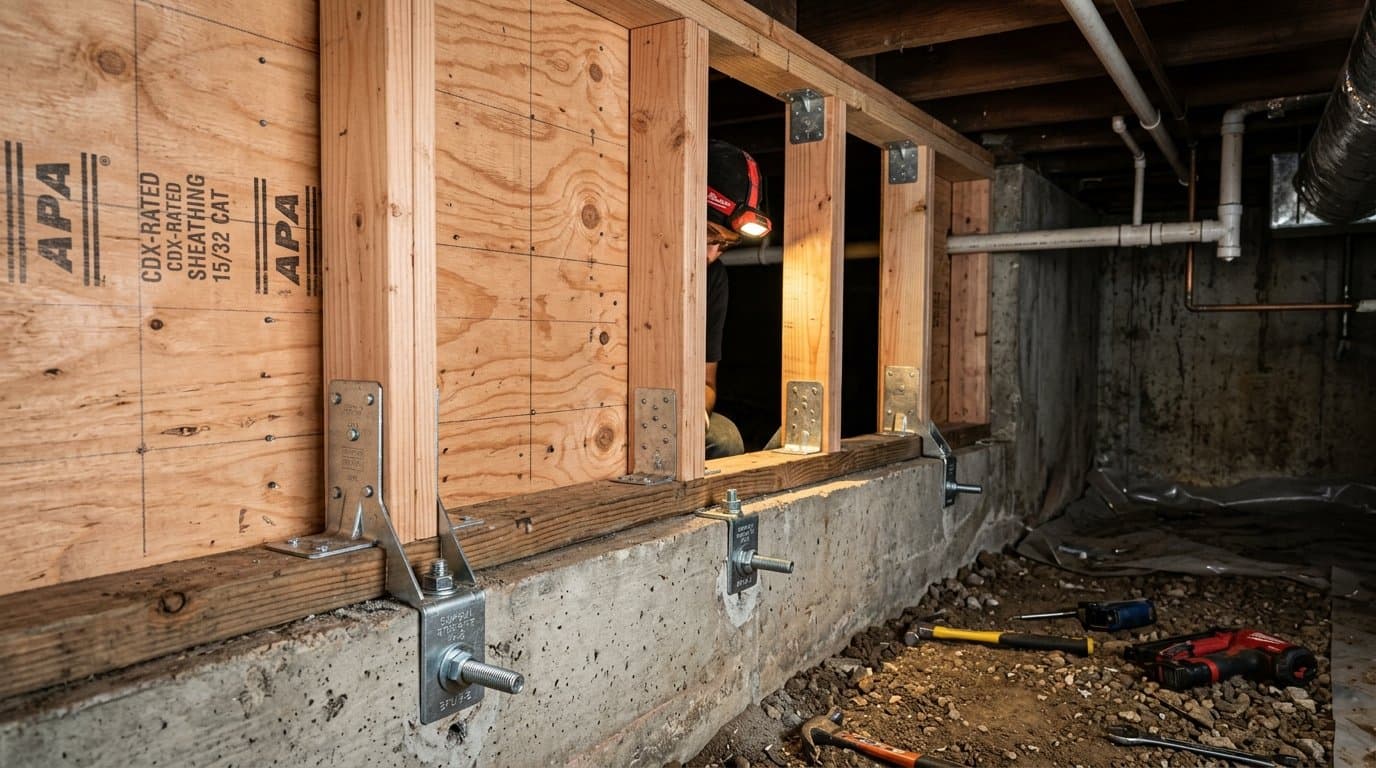
Explore the top 5 warning signs that your raised foundation home is vulnerable to earthquake damage. Learn about mudsill anchoring, cripple walls, and how to verify safety.
Table of Contents
Southern California has a rich history of architectural styles, from the historic Craftsman bungalows of Pasadena to post-war tract homes in Torrance and Orange County. A common feature of these older homes is a raised foundation, which elevates the first floor above the ground to create a crawl space.
While raised foundations offer many benefits—including easier plumbing access and insulation—they are highly vulnerable to seismic activity. If your home has not undergone a seismic upgrade, a major earthquake could slide the framing off its concrete footing, collapsing the walls.
At PiersPro, operating under California General Contractor License #1110475, we believe in empowering homeowners with data, not sales pitches. In this guide, we will break down the top 5 signs your house needs a seismic retrofit and explain the structural mechanics behind raised foundation earthquake risks.
The Top 5 Warning Signs of Seismic Vulnerability
Evaluating your home's earthquake readiness requires checking the structural connections under your house in the crawl space. Here are the five key signs to check:
1. Construction Date Prior to 1980
The simplest indicator of seismic risk is the age of your home. Before the late 1970s, California building codes did not mandate mechanical anchoring (foundation bolting) or shear-wall bracing (cripple wall sheathing) for residential wood-frame homes. If your house was built before 1980 and has never been upgraded, it is structurally unreinforced.
2. Lack of Anchor Bolts (Unbolted Mudsill)
If you look into your crawl space and see the horizontal wood plate (mudsill) resting directly on top of the concrete foundation wall without any steel bolts or nuts, your mudsill is unbolted. In an earthquake, the side-to-side ground motion will slide the wood frame off the concrete, dropping the house.
3. Bare, Unbraced Wood Stud Cripple Walls
Cripple walls are the short wood walls that extend from the top of the foundation concrete to the floor joists. If these walls are covered only with exterior stucco or plaster on the outside, and show bare wood studs on the inside without plywood sheathing, they lack shear strength. Ground shaking will collapse them sideways like a folding card table.
4. Absence of Foundation Plates in Tight Clearance Areas
In some homes, the crawl space height is too low to install vertical foundation bolts through the mudsill. In these areas, contractors must use steel Universal Foundation Plates (UFPs) mounted horizontally on the side of the mudsill. If there are no bolts and no steel side plates in these low-clearance zones, the structure is unanchored.
5. Visible Dry Rot or Termite Damage in Crawl Space Wood
Seismic hardware must be anchored to strong, dense wood. If your mudsill, posts, or columns are showing signs of wood rot (fungal cubic cracking) or termite damage, the wood has lost its fiber density. Even if bolts are installed, the weakened wood will split or tear away from the hardware during an earthquake.
---
Mid-Content Call to Action
Are you unsure if your crawl space has anchor bolts or plywood sheathing?
Don't wait for the ground to shake. PiersPro offers a detailed $99 Instrumental Diagnostic where we inspect your crawl space, evaluate structural wood density, and profile floor levels. We credit the $99 back to your contract if you proceed with repairs.
Book a Diagnostic Inspection or call (213) 583-6669 to speak with our engineering team.
---
Technical Summary of Seismic Risks
| Warning Sign | Where / How to Inspect | Structural Meaning / Risk |
|---|---|---|
| Pre-1980 Construction | Review property records or deed | Lacks modern building code seismic requirements. |
| No Mudsill Bolts | Inspect crawl space perimeter along mudsills | Wood framing can slide off concrete footing. |
| Unbraced Cripple Studs | Check interior crawl space walls | Stud walls can fold sideways, dropping floor joists. |
| No Side Plates (Low Clearance) | Check mudsills in tight crawl space zones | No structural transfer of lateral loads in low-clearance areas. |
| Wood Decay / Dry Rot | Perform Resistograph test or screwdriver check | Seismic hardware can tear out of weakened wood fibers. |
E-E-A-T: Trustworthy Diagnostics from PiersPro
At PiersPro, we operate under a strict "No-Upsell" policy. Our mission is to provide you with an objective, engineering-based evaluation of your home’s foundation. If your house has already been bolted and braced to code, we will issue a compliance report confirming its safety and will never push you into unnecessary work.
You can check our active license #1110475 directly at cslb.ca.gov and review photos of our completed EBB-compliant retrofits in our Projects section.
Frequently Asked Questions (FAQ)
Q1: Can I check my own crawl space for seismic anchoring?
A1: Yes, if you have safe, dry access to your crawl space. Carry a flashlight and inspect the perimeter walls. Look for steel anchor bolts with nuts and washers protruding from the wood mudsill into the concrete. If you see only bare wood resting on concrete, or wood secured only with nails, the mudsill is unbolted.
Q2: What is the risk of living in a home built on a slab foundation?
A2: Slab-on-grade homes do not have crawl spaces or cripple walls, meaning they are not subject to the same "folding table" cripple wall collapse risk. However, they can still experience concrete cracking or settlement due to soil expansion.
Q3: How does dry rot affect a seismic retrofit?
A3: Dry rot decays wood fibers, removing their mechanical strength. If we install bolts through a rotted mudsill, the wood will crumble under the shear stress of an earthquake. We must replace or sister the rotted wood members before installing bolts.
Q4: Does completing a retrofit lower my insurance rates?
A4: Yes. Once PiersPro completes your retrofit and building permits are closed, we will sign Form DUC-M-01. You can submit this to your insurance carrier to secure a premium discount of up to 20% to 25% from the California Earthquake Authority (CEA).
Secure Your Southern California Home
Don't leave your home's safety to chance. Let the experienced professionals at PiersPro inspect your crawl space and verify your seismic readiness.
Contact PiersPro today. Call us at (213) 583-6669 or book your diagnostic online to schedule an inspection.