
Discover cutting-edge drainage innovations, smart water management, and crucial Southern California regulations to safeguard your home's foundation from costly water damage.
Table of Contents
- The Evolving Landscape of Residential Drainage in Southern California
- Beyond the Basic French Drain: 2025/2026 Innovations for Permanent Protection
- The PiersPro Advantage: Engineered for Permanent Protection
- Modern Drainage Solutions: Options and Considerations
- Frequently Asked Questions About Residential Drainage
- Protect Your Investment with Expert Drainage Solutions
Water: it's the lifeblood of our planet, yet for many Southern California homeowners, it can also be a silent, destructive force. From persistent puddles that drown your landscaping to insidious moisture seeping into your foundation, unchecked water runoff can lead to a cascade of problems: soil erosion, costly foundation damage, mold growth in crawl spaces, and even compromised structural integrity. As an expert structural engineer and general contractor, I've seen firsthand the devastating impact water can have, especially in a region prone to both seasonal downpours and the complexities of diverse soil conditions.
At PiersPro, we understand that protecting your home from water damage isn't just about reacting to a problem; it's about implementing proactive, permanent engineering solutions that stand the test of time. With the latest advancements in drainage technology and evolving regional regulations, ensuring effective water management around your property in 2026 is more crucial—and more innovative—than ever before. Our California General Contractor License #1110475 signifies our commitment to the highest standards of safety, quality, and expertise in every project we undertake.
The Evolving Landscape of Residential Drainage in Southern California
Southern California's unique climate, characterized by long dry spells punctuated by intense rainy seasons, creates distinct challenges for residential drainage. Historically, water was often viewed as something to simply get rid of. However, a significant paradigm shift is underway, largely driven by environmental concerns and a growing understanding of water as a valuable resource. California is now actively working to increase stormwater capture and use to augment its water supply, with statewide targets aiming to add substantial acre-feet annually from urban stormwater capture by 2030 and beyond.
This evolving perspective is reflected in new policies and initiatives. For instance, the California State Water Resources Control Board is developing a Statewide Urban Stormwater Infiltration Policy, with a draft anticipated in Fall 2025. This policy will introduce a risk-based framework for urban infiltration projects, providing clear, science-based guidance on best practices while simultaneously protecting groundwater quality. Homeowners considering permeable solutions or infiltration systems should be aware that this policy will likely dictate minimum vertical distances from groundwater and drinking water wells, and may require pretreatment for certain land uses to ensure water quality.
Furthermore, programs like the Safe, Clean Water Program in Los Angeles County provide local funding for multi-benefit stormwater and urban runoff capture projects, highlighting the regional commitment to sustainable water management. As the 2025 edition of the California Building Standards Code becomes mandatory on January 1, 2026, local jurisdictions like LADBS will continue to enforce these updated codes, often with local amendments tailored to specific regional risks such as seismic activity or wildfire exposure.
For homeowners, this means that modern drainage isn't just about preventing leaks; it's about integrating your property into a broader, more sustainable water management ecosystem that protects your home and contributes to regional water resilience.
Beyond the Basic French Drain: 2025/2026 Innovations for Permanent Protection
While the fundamental principle of redirecting water remains, the technology and materials used in drainage systems have seen remarkable advancements. The 'set it and forget it' mentality of old is giving way to smarter, more efficient, and longer-lasting solutions that leverage cutting-edge engineering.
Smart Drainage Systems: Real-Time Insights and Predictive Power
One of the most exciting innovations is the rise of 'smart drainage systems.' These intelligent networks utilize IoT-enabled (Internet of Things) sensors to provide real-time monitoring of water levels, flow rates, and even potential pollution. Imagine receiving an alert on your smartphone if a blockage is forming or if water levels are rising beyond a safe threshold. This proactive approach allows for maintenance before minor issues escalate into significant, costly problems. Some systems are even integrating with existing smart home networks, allowing property owners to receive updates and manage their drainage remotely.
Beyond simple monitoring, advancements in AI-based analytics are enabling these systems to predict rainfall patterns with remarkable accuracy. This predictive modeling allows for dynamic flow control, potentially diverting stormwater or optimizing system performance ahead of extreme weather events, significantly minimizing flood risks. The global smart drainage market is projected to reach $10 billion by 2026, underscoring the rapid adoption and growing need for these efficient water management solutions.
Advanced Materials and Engineered Designs
The components of modern French drains and runoff diversion systems are also vastly superior to their predecessors. Innovations address common failure points like clogging and pipe collapse:
* High-Performance Geotextile Fabrics: Older systems often used basic landscape fabric that could easily clog with fine soil particles. Today's advanced woven or nonwoven geotextile fabrics boast anti-clogging properties, allowing water to pass through while effectively filtering out silt and clay, a crucial feature in Southern California's often clay-heavy soils.
* Improved Pipe Technology: Newer corrugated pipes feature smoother interior linings, which enhance water movement and reduce debris buildup. They are also more flexible, making installation easier around existing landscaping and uneven terrain. Furthermore, high-quality pipes made from recycled plastics offer enhanced durability and sustainability.
* Prefabricated Trench Drain Systems: For certain applications, pre-assembled drain sections with built-in filtration layers are now available. These reduce on-site labor and ensure consistent quality, particularly beneficial in urban properties where space is often limited.
* Trenchless Technologies: For existing underground pipes requiring rehabilitation, cutting-edge pipe lining innovations like Cured-in-Place Pipe (CIPP) and epoxy lining can restore structural integrity without extensive excavation. These trenchless methods are faster, less disruptive, and offer long-term performance improvements.
Sustainable Urban Drainage Systems (SuDS): Blending Functionality with Aesthetics
Beyond traditional piping, the integration of Sustainable Urban Drainage Systems (SuDS) into residential properties is gaining traction. These eco-friendly solutions manage water naturally by mimicking hydrological processes, not only reducing runoff and improving water quality but also enhancing green spaces and supporting biodiversity. Examples include:
* Rain Gardens and Bioswales: These vegetated depressions or channels are designed to collect and filter stormwater runoff, allowing it to gradually infiltrate the soil. They are aesthetically pleasing and create valuable habitats.
* Permeable Pavements: Used for driveways, walkways, and patios, these surfaces allow water to seep through, reducing surface runoff and recharging groundwater.
* Bio-retention Systems: These utilize soil and plants to filter stormwater, effectively removing pollutants before the water re-enters the ground.
These systems not only protect your property but also contribute to a healthier local environment, making them an excellent choice for the environmentally conscious homeowner.
The PiersPro Advantage: Engineered for Permanent Protection
At PiersPro, we pride ourselves on being at the forefront of these innovations, offering Southern California homeowners permanent, engineered drainage solutions that address both immediate concerns and long-term structural integrity. We understand that effective water management is intrinsically linked to foundation waterproofing and the stability of structures like retaining walls. Our approach integrates comprehensive site analysis, including soil percolation testing and grade evaluation, to design systems that work seamlessly with your property's unique conditions and the natural flow of water.
We utilize high-grade materials that resist root intrusion and settling, ensuring decades of effectiveness. Our professional team is adept at implementing advanced French drains, intricate runoff diversion systems, and integrating sustainable practices where appropriate. With our expertise, you're not just getting a drain; you're investing in a sophisticated water management system designed to protect your most valuable asset.
Modern Drainage Solutions: Options and Considerations
Choosing the right drainage system involves understanding your property's specific needs, the local climate, and the available technologies. Here's a quick overview of common modern solutions:
| Drainage System Type | Primary Benefit | Key Modern Innovation | Considerations |
|---|---|---|---|
| French Drains | Subsurface water collection & diversion (soggy lawns, near foundations) | Anti-clogging geotextiles, smoother/flexible pipes, smart monitoring | Requires proper slope & outlet; effectiveness enhanced with modern materials. |
| Catch Basins & Grates | Surface water collection (patios, driveways, low spots) | Aesthetic, durable grates in various styles; integration with underground pipes | Ensures quick removal of standing water; must be sized correctly for flow. |
| Channel Drains | Linear surface water collection (driveways, pool decks, walkways) | Engineered for high flow and aesthetics; durable materials | Blends seamlessly into hardscapes; needs proper outlet. |
| Dry Wells / Infiltration Systems | Groundwater recharge, reducing runoff (suitable soils) | Risk-based framework (CA SWRCB), specific setback requirements | Requires suitable soil percolation; adherence to new statewide infiltration policy is critical. |
| Rain Gardens / Bioswales | Natural filtration, runoff reduction, aesthetic appeal | Integrated with landscaping for multi-benefit ecological solutions | Requires adequate space and maintenance for plant health; contributes to green infrastructure. |
| Smart Drainage Systems | Real-time monitoring, predictive analytics, remote alerts | IoT sensors, AI integration, smart home compatibility | Higher initial investment; offers proactive maintenance and flood risk reduction. |
Frequently Asked Questions About Residential Drainage
Q: What is a French drain, and how does a modern one differ from older installations?
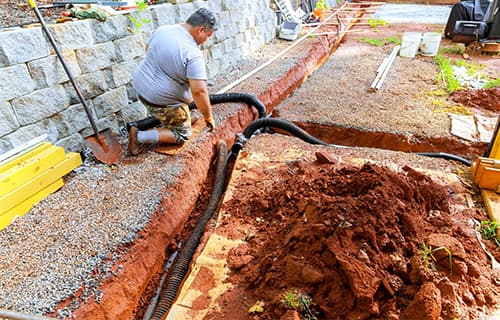
A French drain is a subsurface trench containing a perforated pipe surrounded by gravel and typically wrapped in a geotextile fabric. It's designed to collect groundwater and surface runoff, redirecting it away from your property. Modern French drains significantly differ by incorporating advanced anti-clogging geotextile fabrics, smoother interior-lined pipes for better flow, and often, smart sensors for real-time monitoring and predictive maintenance.
Q: How do I know if I need a drainage system around my Southern California home?
Key indicators you might need a drainage system include standing water or muddy areas in your yard after rain, water seeping into your basement or crawl space, cracked or settling foundation walls, musty odors, or signs of erosion around your home's perimeter or retaining walls. A professional inspection can accurately diagnose the problem and recommend the best solution.
Q: Are these new, advanced drainage systems expensive?
The initial investment for modern, technologically advanced drainage systems can be higher than rudimentary solutions. However, their superior performance, enhanced durability, reduced maintenance needs, and proactive monitoring capabilities often translate to significant cost-effectiveness over the long term. Preventing catastrophic foundation damage or extensive mold remediation saves homeowners substantially in the future. We focus on permanent solutions that deliver value and peace of mind.
Q: How do local regulations, like those from LADBS, affect drainage system installation in Southern California?
Local regulations in Southern California, including those enforced by LADBS, adhere to the California Building Standards Code (Title 24), with the 2025 edition becoming mandatory in 2026. These codes dictate specific requirements for construction and public safety. Additionally, the forthcoming Statewide Urban Stormwater Infiltration Policy from the California State Water Resources Control Board will provide strict guidelines for any infiltration-based drainage projects, including minimum separation distances and potential pretreatment requirements. Working with a knowledgeable local contractor like PiersPro ensures your drainage system is designed and installed in full compliance with all current and upcoming regulations.
Protect Your Investment with Expert Drainage Solutions
Don't let water compromise the safety and value of your Southern California property. Investing in a robust, modern drainage system is a proactive step towards lasting structural integrity and peace of mind. At PiersPro, we're dedicated to providing cutting-edge, engineered solutions that address your unique drainage challenges with unparalleled expertise and lasting results.
Ready to safeguard your home against water damage? Contact PiersPro today for a complimentary, no-obligation instrumental diagnosis and expert consultation. Call us at (213) 583-6669, or visit our contact page to learn more about how our advanced drainage systems can protect your home for years to come.