
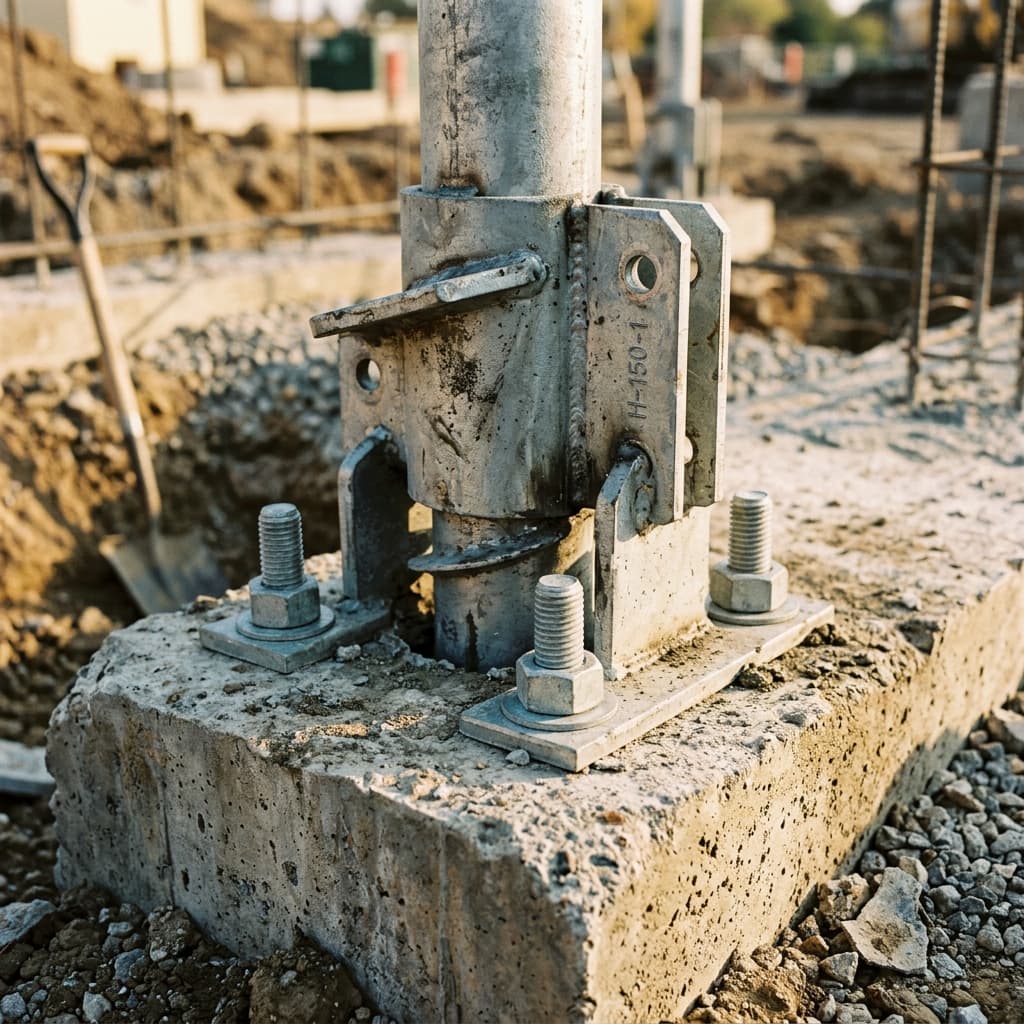
Explore the engineering principles of helical pier foundation repair. Learn how torque-driven steel piles transfer structural loads to stable deep soil layers.
Table of Contents
When a home foundation settles due to weak or expanding surface soils, standard footings are no longer able to support the weight of the structure. To permanently stabilize the building, engineers rely on deep foundation systems. The most widely used, reliable, and cost-effective deep foundation method for residential structures is the steel helical pier (also known as a helical pile).
Instead of relying on the weak soil near the surface, helical piers bypass these unstable layers entirely, transferring the structural load of your home deep into the earth.
At PiersPro, operating under California General Contractor License #1110475, we design and install engineered helical pier systems. In this technical guide, we will explain how helical piers work, detail the physics of torque-to-load correlation, and discuss how helical piles load calculations guarantee structural safety.
What is a Helical Pier?
A helical pier is a structural steel pile consisting of a central steel shaft with one or more helical (spiral, screw-like) steel plates welded to the lead section.
The system consists of three primary components:
- The Lead Section: The first steel shaft driven into the ground, featuring the spiral plates (helices) that pull the pier into the soil.
- Extensions: Threaded or bolted steel shafts added to the lead section to drive the pier deeper until it reaches load-bearing soil strata.
- Foundation Bracket: A heavy steel bracket attached to the top of the pier that sits underneath the home’s concrete footing to lift and support the structure.
The Science of Torque-to-Load Correlation
Unlike traditional concrete piles, which require driving to refusal or waiting for concrete to cure, helical piers utilize a precise engineering principle known as torque-to-load correlation.
As the hydraulic machinery screws the pier into the ground, the rotational force (torque) required to turn the shaft increases. This resistance is measured in real time using digital torque sensors.
According to structural engineering formulas:
$$P_u = K_t \times T$$
Where:
* $P_u$ is the ultimate load-bearing capacity of the pier (in pounds).
* $K_t$ is the torque correlation factor of the steel shaft (determined by the shaft diameter and shape).
* $T$ is the installation torque achieved (in foot-pounds).
By monitoring the torque during installation, our technicians know the exact load-bearing capacity of each pier before we connect it to your home. This ensures that every pier meets the structural safety factors required by the California Building Code (CBC).
---
Mid-Content Call to Action
Is your home experiencing active settlement or foundation cracking?
Schedule a scientific, data-driven evaluation with PiersPro. Our $99 Instrumental Diagnostic maps your floor elevations and evaluates crawl space structural loads. If repairs are performed, the $99 is fully credited to your contract.
Schedule a Diagnostic Inspection or call (213) 583-6669 to speak with our engineering team.
---
Mapped Component Functions and Engineering Standards
| Pier Component | Function | Engineering Standard / Material |
|---|---|---|
| Central Steel Shaft | Transfers vertical loads from bracket to deep soils | High-strength carbon steel (ASTM A500 Grade B or C) |
| Helical Plates (Helices) | Acts as a screw thread to pull pier down; provides bearing area | ASTM A36 structural steel (typically 3/8" or 1/2" thickness) |
| Hydraulic Torque Drive | Screws the pier into the soil with high rotational force | Calibrated hydraulic motor with real-time digital torque readout |
| Foundation Bracket | Anchors the steel pier to the concrete footing | Heavy-duty, hot-dip galvanized steel (ASTM A123) |
The Installation Process
Installing helical piers is a clean, low-vibration process that is completed in four steps:
- Footing Excavation: We dig a small, 3x3-foot hole next to the foundation wall at each pier location to expose the concrete footing.
- Pier Driving: We use a hydraulic torque motor mounted on a mini-excavator to screw the helical pier into the soil. Extensions are added as needed until the targeted engineering torque is achieved.
- Bracket Mounting: We chisel the underside of the concrete footing to create a flat bearing surface, then mount the heavy steel bracket underneath the footing and secure it to the pier shaft.
- Structural Lifting: Using hydraulic jacks connected to the brackets, we carefully lift the settled foundation back toward its original level and lock the brackets in place. We then backfill and compact the soil.
At PiersPro, we operate under a strict "No-Upsell" policy. If your foundation is sound and within code limits, we will tell you and won't recommend any repairs. You can review photos of our actual helical pier installations in our Projects section.
Frequently Asked Questions (FAQ)
Q1: What depth do helical piers typically reach in Southern California?
A1: The depth depends entirely on local soil profiles. In sandy or clay-heavy areas, piers typically reach load-bearing strata at 15 to 30 feet. In deep fill soils or hillside properties, they can extend to 50 feet or deeper.
Q2: What is the main advantage of helical piers over concrete piers?
A2: Helical piers require no concrete pouring, meaning there is zero curing time. We can lift the structure immediately after installation. They also require much smaller machinery, making them ideal for properties with tight access.
Q3: How do we know the pier won't rust underground?
A3: PiersPro uses hot-dip galvanized steel for all shafts and brackets. The zinc coating protects the steel from corrosion for 75+ years, even in acidic or moist soils.
Q4: Can helical piers be used to lift historic masonry homes?
A4: Yes. Because they are screwed into the ground rather than driven with a hammer (like push piers), helical piers produce zero vibrations. This makes them the safest choice for older, fragile brick or plaster structures.
Secure Your Deep Foundation with PiersPro
Trust the experts who prioritize engineering accuracy over sales targets. Contact PiersPro today to schedule a detailed evaluation of your foundation.
Contact PiersPro today. Call us at (213) 583-6669 or book your diagnostic online to schedule an inspection.