
Discover how to identify and treat dry rot in your home's primary framing. Learn the signs of wood rot, structural repair methods, and Southern California costs.
Table of Contents
Wood rot is one of the most common threats to the structural health of Southern California homes. Despite our warm, dry climate, a combination of coastal marine layer humidity, poor subfloor ventilation, and plumbing leaks can trap moisture in crawl spaces. This creates the perfect breeding ground for wood-destroying fungi. When this decay attacks primary framing members—such as girders, sill plates, and support posts—it requires immediate dry rot structural repair.
Left untreated, dry rot severs the load-bearing paths of your home, causing floor sagging, wall cracking, and eventually localized structural collapse.
At PiersPro, operating under California General Contractor License #1110475, we specialize in non-destructive wood diagnostics and permanent structural reinforcement. In this guide, we will outline the primary wood rot load bearing beam signs, discuss treatment options, and detail repair costs in Los Angeles and Orange County in 2026.
What is Dry Rot?
Dry rot (specifically caused by the fungus *Serpula lacrymans*) is a form of wood decay where fungi digest the cellulose that gives wood its strength. The term "dry rot" is somewhat misleading; the fungus requires moisture (typically above 20% wood moisture content) to establish itself. However, once established, the fungus can transport moisture from damp areas to dry wood, allowing the decay to migrate across healthy framing.
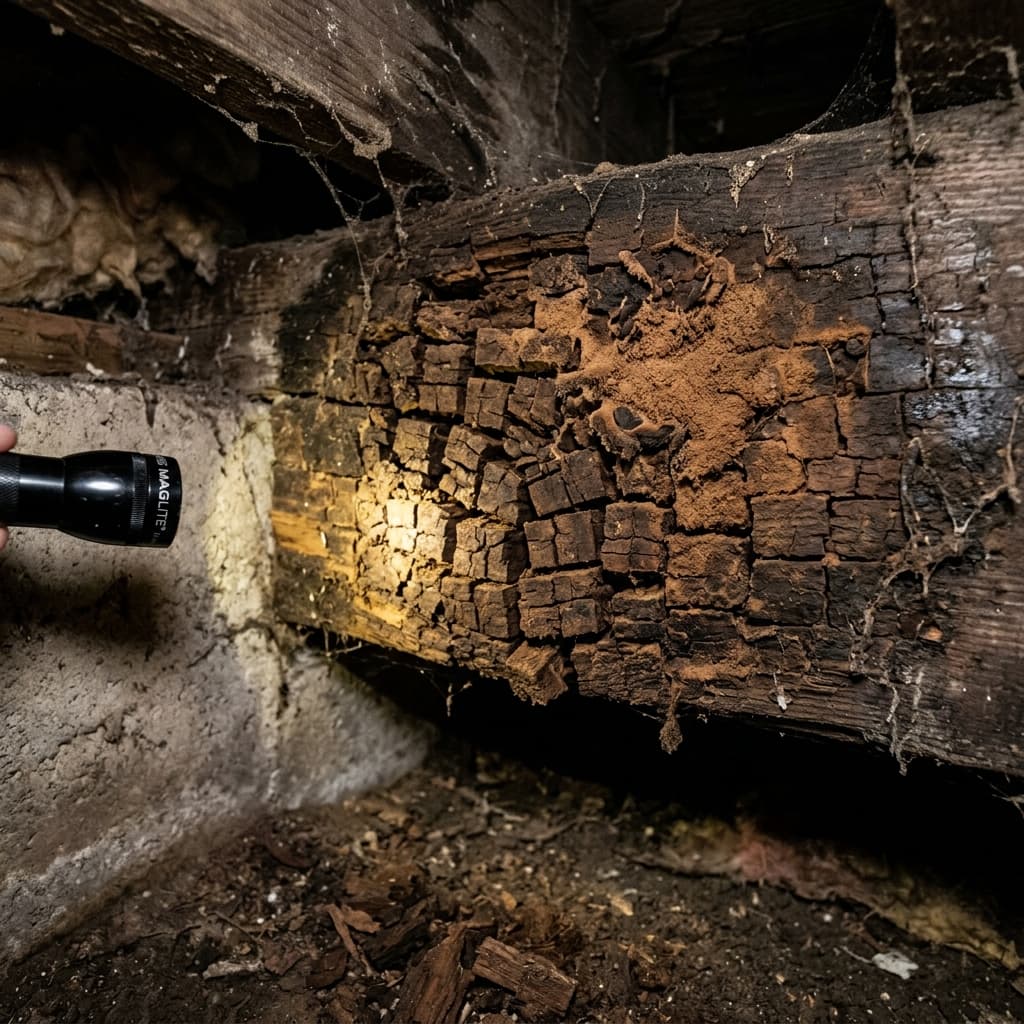
As the wood fibers are consumed, the timber shrinks, darkens, and develops deep, block-like cracks (known as brown rot or cubical fracture). The wood loses all compressive and tensile strength, easily crumbling into dust under finger pressure.
Common Signs of Load-Bearing Wood Rot
Because dry rot occurs underneath the house in the crawl space or behind stucco walls, homeowners often do not notice the decay until it has caused secondary damage. Look for the following symptoms:
- Sagging or Bouncy Floors: If your floors slope or feel spongy when you walk across the room, the load-bearing beams or joists below have lost their structural capacity.
- Musty Odors: A persistent damp, earthy smell around baseboards or inside the crawl space is a strong sign of active fungal growth.
- Spore Dust: Active dry rot produces a fine, rust-colored dust (fungal spores) that accumulates on crawl space floors.
- Wood Cubical Cracking: Affected wood develops deep cracks along and across the grain, making the timber look like burnt charcoal or blocky chunks.
- Jammed Doors and Windows: As wood beams settle due to rot, it shifts the door and window frames out of alignment, causing them to bind or stick.
---
Mid-Content Call to Action
Do you suspect dry rot is damaging the structural wood under your house?
PiersPro provides professional wood diagnostics. Our $99 Instrumental Diagnostic utilizes digital moisture meters and Resistograph density testing to map the exact extent of decay. We credit the $99 back to your contract if you hire us for repairs.
Book a Diagnostic Inspection or call (213) 583-6669 to speak with our structural team.
---
Treating and Repairing Load-Bearing Dry Rot
To resolve load-bearing dry rot permanently, we follow a strict structural repair protocol:
1. Source Moisture Mitigation
We must identify and eliminate the source of moisture (e.g., repairing plumbing leaks, installing subfloor vapor barriers, or correcting exterior grading) before performing structural repairs, or the new wood will rot on the same timeline.
2. Fungicidal Treatment
We remove the rotted wood and treat the surrounding healthy framing with a professional-grade borate fungicide. This kills any hidden fungal hyphae and protects the wood from future fungal and termite attacks.
3. Structural Reinforcement (Sistering vs. Replacement)
* Epoxy consolidation: For localized, minor decay, we inject low-viscosity structural epoxy to bond the wood fibers.
* Beam Sistering: For moderate joist decay, we install temporary shoring, cut away the rot, and bolt a new pressure-treated timber or engineered LVL beam alongside the damaged member.
* Girder Replacement: For severe decay in primary girders, we install heavy-duty shoring towers, raise the floor slightly, remove the rotted girder, and install a new, code-compliant Laminated Veneer Lumber (LVL) beam.
Summary of Wood Rot Indicators and Repairs
| Sign of Decay | Diagnostic Method | Recommended Repair |
|---|---|---|
| Spongy/sloped flooring | Digital laser elevation map | Joist/girder sistering or full beam replacement under shoring. |
| Musty crawl space smell | Relative humidity check (>60%) | Crawl space encapsulation, drainage fix, vapor barrier. |
| Cubical cracks in mudsill | Resistograph wood testing | Sectional mudsill replacement + borate treatment. |
| Termite exit holes / Frass | Borescope internal cavity check | Pest treatment + structural sistering or epoxy injection. |
E-E-A-T: Honest Diagnostics from PiersPro
At PiersPro, we operate under a strict "No-Upsell" policy. If your crawl space wood has minor surface discoloration that does not affect structural integrity, we will tell you and recommend a simple sealant or improved ventilation. We only recommend structural reinforcement when load paths are compromised.
You can check our contractor credentials (License #1110475) at cslb.ca.gov and review photos of our actual crawl space repairs in our Projects section.
Frequently Asked Questions (FAQ)
Q1: Is dry rot covered by standard homeowners insurance?
A1: Generally, no. Most homeowners insurance policies exclude dry rot, insect damage, and wear-and-tear, as they are considered maintenance issues. However, if the dry rot was caused by a sudden, accidental plumbing leak that is covered under your policy, the structural repair may be eligible for coverage.
Q2: What is the difference between wet rot and dry rot?
A2: Wet rot requires continuous, direct water contact to survive and typically remains localized. Dry rot requires less moisture, can transport water to dry areas, and spreads aggressively through walls and framing.
Q3: How long does structural dry rot repair take?
A3: Most localized repairs (such as sistering three or four joists) take 1 to 2 days. Large girder replacements involving shoring and lifting floors take 3 to 5 days.
Q4: Can I use regular lumber for crawl space repairs?
A4: No. Building codes require any wood in direct contact with concrete or within 18 inches of crawl space soil to be pressure-treated or rot-resistant lumber (like redwood or treated Douglas Fir) to prevent fungal decay.
Schedule an Inspection Today
Catch dry rot early before it causes costly structural damage. Trust PiersPro for honest, data-driven diagnostics.
Contact PiersPro today. Call us at (213) 583-6669 or book your diagnostic online to schedule an inspection.